Daisy Flowers Line Art SVG
First Impression: Light, Lyrical, and Purposefully Minimal
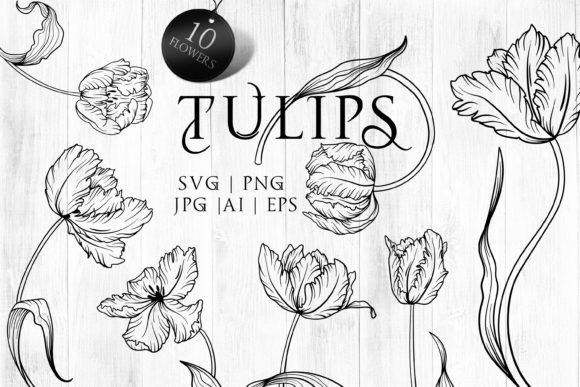
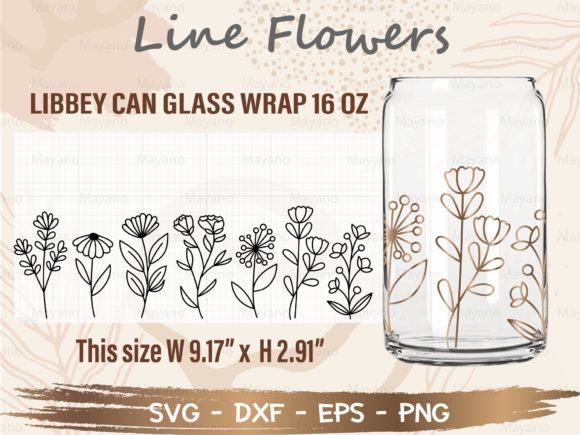
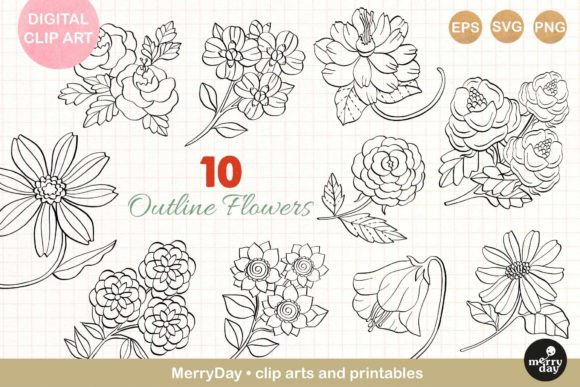
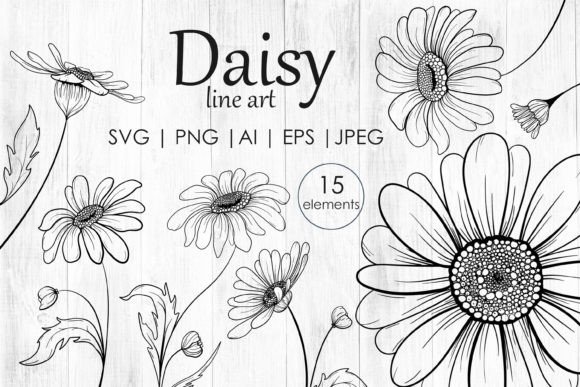
Opening Daisy Flowers Line Art SVG feels like flipping to a quiet page in a botanical sketchbook—clean, unhurried, and quietly confident. It’s not fussy or overly detailed; it’s linear daisies and leaves, hand drawn with subtle variation in line weight and organic rhythm. There’s air between the stems, gentle curves in the petals, and just enough asymmetry to feel human-made—not algorithmically perfect. That breathability is its biggest strength for embroidery. This isn’t a design that fights the needle—it invites it. It reads as spring without shouting “spring,” and summer without sunburnt saturation. For a custom embroidered tote bag I recently prepped for a local florist’s pop-up, this was the exact kind of graphic that would sit comfortably beside hand-lettered shop names—not compete with them.
Where It Shines (and Where It Asks for Thought)
Daisy Flowers Line Art SVG works beautifully on medium-weight, stable fabrics where stitch clarity matters most: cotton twill aprons, linen pillow covers, midweight sweatshirts, and structured baby onesies. Its simplicity translates well into satin stitch outlines or delicate running stitch interpretations—no dense fill stitches required, which means less thread buildup, cleaner edges, and faster hooping. I tested it as a single-stem motif on a tea towel hem, and the result felt intentional, not sparse. Customers noticed the restraint—the way the daisy didn’t overwhelm the fabric—and several asked if it was custom-drawn (it wasn’t, but that’s a compliment any embroidery designer respects).
That said, it demands context awareness. On highly textured fabrics—like bouclé knit or heavy terry cloth—the fine lines can blur or disappear mid-stitch unless you adjust underlay and reduce stitch density manually. On stretchy fabric (think lightweight jersey tees), the linear nature makes registration trickier; slight distortion around petal tips is possible without proper stabilizer and hooping tension. And on dark fabric? It reads best with high-contrast thread—ecru on charcoal, white on navy—but avoid pale pastels unless your client specifically wants subtlety over visibility.
Real-World Fit: From Boutique Shelf to Etsy Cart
This isn’t just a “pretty file.” It’s a versatile design asset for makers who value cohesion across product lines. As an embroidery designer for small shops, I’ve used Daisy Flowers Line Art SVG to unify collections: same stem repeated along the cuff of matching kitchen towels and oven mitts; scaled down as a tiny chest emblem on baby caps; layered beneath monogrammed initials on personalized sweatshirts. Its line-art nature makes it ideal for combining—pair it with a simple script font SVG for wedding guest towels, or nestle it beside a minimalist bee icon for a honey-themed boutique line.
For Etsy sellers and craft fair vendors, it adds handmade credibility without demanding advanced digitizing skills. Since it’s built for clean outlines, even beginners can convert it into an applique design or use it as a guide for hand-embroidered motifs. And because it’s rooted in illustration—not clipart—it elevates perceived value. A customer paying $48 for an embroidered linen napkin set doesn’t want “cute daisies”; they want *this* daisy: considered, calm, and quietly sophisticated.
What It Does for Your Brand (and What It Doesn’t)
Daisy Flowers Line Art SVG supports brand consistency by offering visual continuity across digital mockups, printed hang tags, and stitched products. Use it in your printable mockups to show clients how a dainty stem looks on a curved cap brim—or how three small blooms align across a pillow cover seam. That consistency builds trust: when your online preview matches the finished product down to line weight and spacing, buyers feel seen, not sold-to.
But it won’t carry weight alone on complex surfaces. Don’t rely on it for dense, multi-layered commercial embroidery projects—say, a full-back design on a performance jacket—unless you’re prepared to reinterpret it with strategic fills or companion elements. Its power lies in restraint, not coverage. And while it’s lovely on nursery decor or holiday gifts (think Easter egg towels or Mother’s Day tea towel sets), it doesn’t inherently signal occasion—it needs thoughtful pairing to land emotionally.
Practical Designer Notes Before You Stitch
- Always test first: Run Daisy Flowers Line Art SVG on scrap fabric matching your final project’s weight and texture—especially before committing to a batch of baby onesies or boutique sweatshirts.
- Check contrast early: Preview the design in black-and-white mockups against both light and dark backgrounds. Does the stem still read clearly at 1.5” height on charcoal fleece?
- Stabilizer isn’t optional: Even with simple lines, lightweight cutaway or tear-away stabilizer prevents puckering on woven fabrics—and keeps petal tips sharp.
- Hoop size matters: The layout suggests comfortable scaling from 2”–4”, but verify your machine’s minimum recommended hoop size for clean line work—tiny versions may lose definition.
- Licensing check: Since Daisy Flowers Line Art SVG is listed as Graphics for Illustrations, confirm whether commercial use (e.g., selling finished embroidered patches or digital embroidery files) is permitted under its license before listing on Etsy or bundling into a craft business kit.
- Thread color strategy: Stick to matte, natural-fiber threads (cotton or rayon) to honor the hand-drawn feel—avoid high-sheen metallics unless intentionally contrasting.
A Design That Serves the Maker, Not Just the Machine
In a landscape crowded with over-digitized, over-engineered embroidery files, Daisy Flowers Line Art SVG stands out by doing less—and doing it well. It doesn’t ask you to compensate for clutter or confusion. It asks you to choose thoughtfully: where to place it, what fabric to anchor it in, what story it supports. Whether you’re stitching a single daisy onto a child’s lunchbox napkin or building a seasonal collection for your small shop, this design gives back more than it takes. It’s not just a machine embroidery design—it’s a quiet collaborator in your craft business, one that understands the difference between decoration and meaning.