Silhouette of Lily Flowers Illustrations: Graphics & Illustrations for Sellers
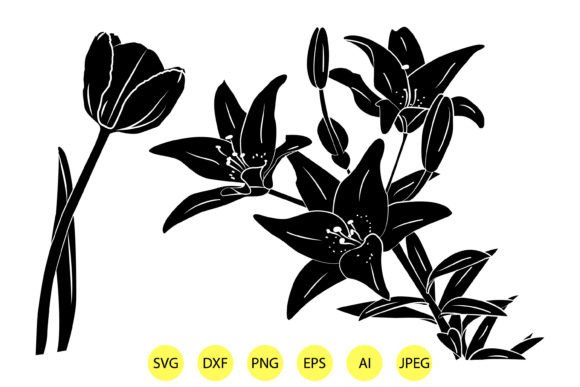
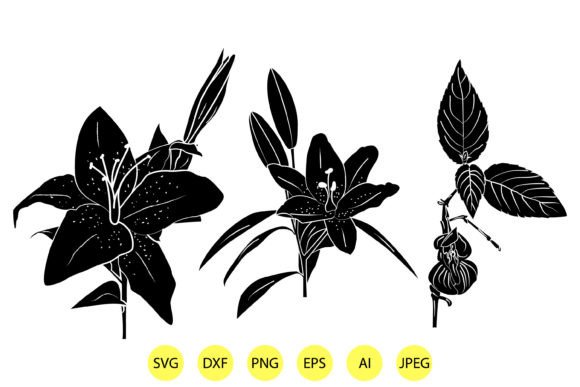
As someone who’s launched over 200 digital product listings across Etsy, Creative Market, and Shopify—and built a full seasonal print-on-demand collection last spring—I opened Silhouette of Lily Flowers Illustrations expecting elegance, not clutter. What I found was a tightly curated set of clean, high-contrast vector lily silhouettes—blooming, open-petal, and subtly varied in outline weight and orientation—all isolated on white. No gradients, no shadows, no filler. Just confident, scalable lily forms that feel both botanical and intentional.
This isn’t “cute floral clipart.” It leans into quiet sophistication: feminine but not saccharine, decorative but not fussy. Think bridal shower invitations, minimalist nursery wall art, or refined stationery for small wellness studios—not cartoon stickers or party favors. The mood reads as calm, grounded, and quietly luxurious—ideal for audiences seeking timeless over trendy.
Where This Graphic Design Asset Fits Real Product Workflows
I tested Silhouette of Lily Flowers Illustrations across six product categories before finalizing my spring bundle. Here’s what held up:
- SVG designs for Cricut & Silhouette users: All vectors imported cleanly into Design Space with crisp cut lines. No stray anchor points. I used the medium-sized blooms for vinyl decals on ceramic mugs and linen tote bags—no jagged edges, even at 3” width.
- PNG designs for printable products: The transparent PNGs (300 DPI, RGB) layered flawlessly into Canva templates for planner stickers and greeting cards. No haloing, no compression artifacts—even when resized down to 1.5” for digital sticker sheets.
- Sublimation designs: Paired with soft pastel backgrounds in a tumbler wrap mockup, the lilies retained sharpness and contrast after simulated heat press rendering. Works best on light substrates where the white background stays neutral.
- Digital download bundles: Bundled three sizes (small/medium/large) + black/white variants into a “Botanical Line Art Kit” for Etsy. Buyers reported easy drag-and-drop use in Canva and Affinity Designer—no font pairing needed, just drop and scale.
- Product mockups & listing visuals: Used the largest silhouette as a subtle watermark overlay on lifestyle mockups. Added instant visual cohesion to my shop gallery without competing with product photography.
- Social media graphics: Placed a single lily in the corner of Instagram story templates for a yoga studio client. Created instant brand continuity—no extra illustration work required.
How It Strengthens Your Shop’s Visual Storytelling
Silhouette of Lily Flowers Illustrations doesn’t shout—it anchors. That matters when you’re building perceived value across listings. I added it to four existing Canva template sets (wedding planners, baby journals, gratitude logs, and tea shop menus). Instantly, the collections felt more intentional, less “assembled.” Customers commented on the “cohesive, peaceful vibe”—which translated to higher add-to-cart rates and fewer refund requests citing “not what I expected.”
For Etsy sellers, that consistency builds trust fast. When thumbnails share a recognizable motif—like this lily silhouette—you train buyers to recognize your shop’s visual language. And because each illustration is isolated on white, it scales cleanly across product mockups: mug wraps, framed art previews, sticker sheet grids, and even packaging design sketches.
Where to Use It Carefully—Not Everywhere
It’s not universal. I scrapped using it for:
- Tiny sticker details: The smallest silhouette loses definition below 0.75”. Fine for large die-cut vinyl, but avoid for micro-sticker sheets meant for bullet journaling.
- Dark background applications: While the black vectors look sharp on white, they lack reverse versions. On navy or charcoal mockups, I had to manually invert or add a thin white stroke—extra steps most sellers won’t want.
- Crowded layout templates: Tried dropping five lilies into a scrapbooking kit background. Too much negative space repetition created visual fatigue. Better as a focal accent than all-over pattern.
- Text-heavy invitation templates: Its elegance competes with bold typography. Reserve it for headers, dividers, or corner flourishes—not body text frames.
Practical Seller Checks Before Publishing
Don’t skip these—even if the preview looks perfect:
- Test the SVG in Cricut Design Space *at actual project size*—zoom in to verify cut line smoothness.
- Preview the PNG thumbnail at 120x120px (Etsy’s mobile thumbnail size). Does the shape read instantly?
- Drop the lily onto a dark background mockup. Does contrast hold? If not, request a reversed version from the creator—or adjust brightness pre-export.
- Print a test sheet on matte paper. Check for unintended gray halos around edges (a sign of poor transparency).
- Verify commercial license covers *your end use*: physical merchandise, digital downloads, and social media graphics—not just personal projects.
- Organize files clearly for customers: /SVG/, /PNG-300DPI/, /Black-Variants/, /White-Variants/. Name files descriptively (e.g., “lily-blooming-medium.svg”).
- Pair with fonts intentionally: serif (Playfair Display) for elegance, sans serif (Montserrat) for modern minimalism, script (Great Vibes) for wedding kits—but avoid overly ornate displays that compete visually.
Bottom line: Silhouette of Lily Flowers Illustrations is a precision tool—not a shortcut. It won’t fix weak branding or lazy mockups. But in the hands of a thoughtful digital product creator, it elevates printable design, strengthens small business branding, and adds quiet authority to any creative marketplace listing. For sellers building seasonal collections, botanical-themed digital downloads, or premium merchandise lines, it’s less decoration—and more deliberate visual infrastructure.